The ankle injury Eliesse Ben Seghir suffered while with Morocco’s national team is not a minor one. This has now been confirmed by an MRI scan. The summer signing will be unavailable to Bayer for several weeks, further delaying his integration.
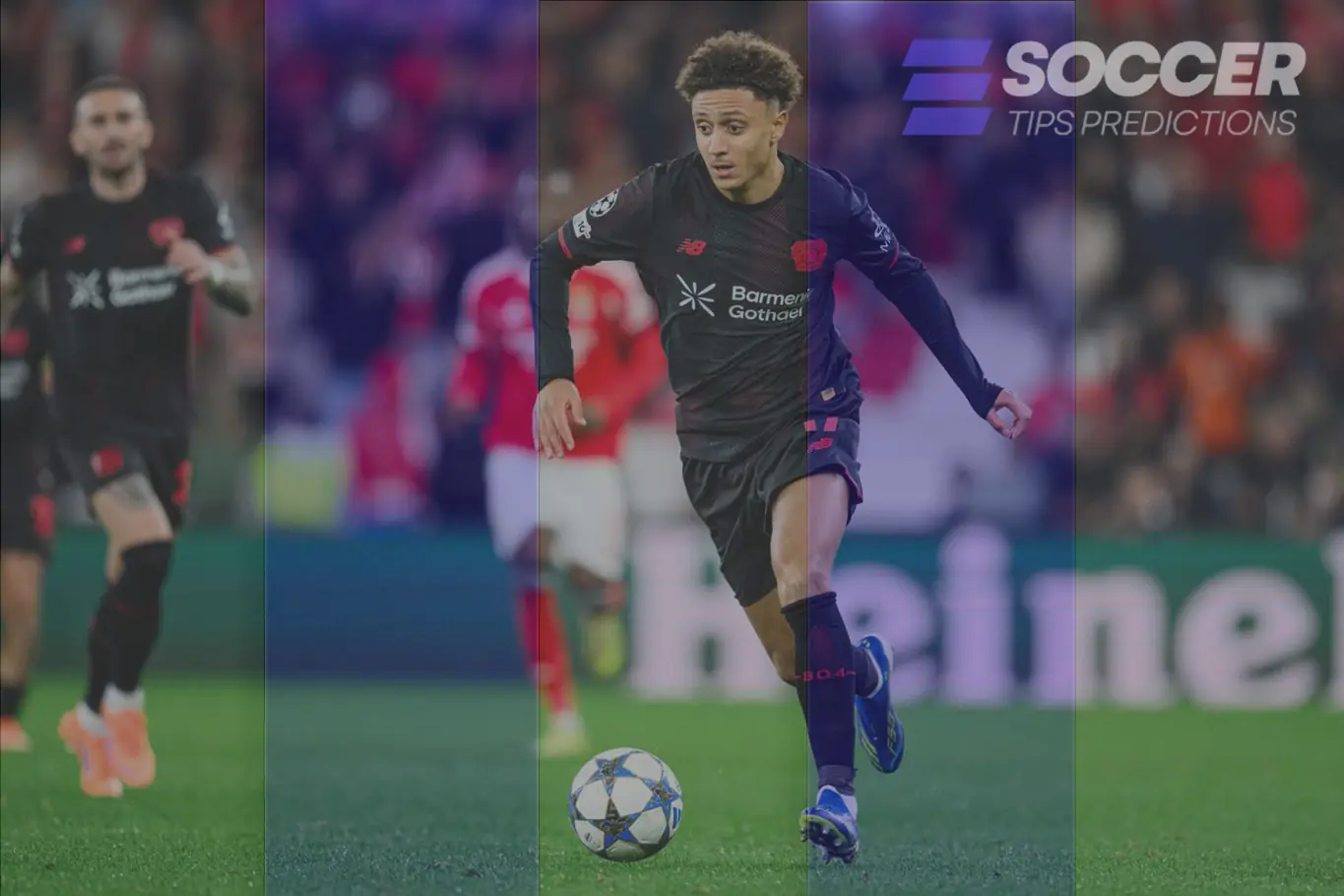
Bayer Leverkusen have been hit by another significant attacking injury setback, with Eliesse Ben Seghir ruled out for several weeks after suffering an ankle problem while on international duty with Morocco.
The club confirmed that the injury occurred in the final training session before the Africa Cup of Nations final, and subsequent examinations showed it is more serious than initially hoped. For Leverkusen, it is not only a short term absence, but another disruption to an attacking unit that has already been stretched by recent events.
Ben Seghir’s profile makes the timing particularly frustrating. Although he is naturally listed as a left winger, he is valued for the way he can come inside onto his stronger right foot, combine in tight spaces and destabilise opponents with dribbling and quick changes of direction. In Hjulmand’s structure, those qualities are especially relevant, because the system relies heavily on players operating in the half spaces behind the striker, rotating positions, receiving between the lines and accelerating the tempo around the box. Losing a player who is built for that kind of role reduces variation and makes the attacking patterns easier to predict.
The situation is made worse by the fact that Ben Seghir is not the only Leverkusen player to return from AFCON with an issue. He is the second Bayer professional to pick up an injury at the tournament after Edmond Tapsoba, who suffered a muscle tear. The difference is that Tapsoba, a defensive pillar, is now close to a comeback, while Ben Seghir is only beginning another period of rehabilitation. That contrast matters because it means the squad is not simply dealing with one temporary absence, but with separate timelines and separate gaps in different areas of the pitch.
From Hjulmand’s perspective, Ben Seghir’s injury further narrows his options in the forward zones of his preferred 3-2-4-1 or 3-4-2-1. These shapes require high quality and depth in the attacking line because the roles are demanding. The wide players and attacking midfielders have to press aggressively, cover large distances, offer vertical runs, and still have the composure to execute in the final third. When one piece is removed, the load on the remaining players increases immediately, not just in match minutes but in responsibility and tactical flexibility.
That issue had already surfaced before Ben Seghir’s setback. Nathan Tella recently picked up a foot injury in Leverkusen’s 0-1 defeat away to Hoffenheim, and the Nigeria international is expected to miss the entire month of February. Tella’s absence is significant because he provides a different type of threat: speed in transition, direct running, and the ability to stretch defensive lines. In a system that wants to create overloads and then attack space quickly, that kind of profile is hard to replace like for like.
On top of those injuries, Leverkusen also reduced their attacking depth during the winter period by ending the loan of Claudio Echeverri. The Manchester City talent, who is only 20, is now on loan at Girona. While Echeverri was not a guaranteed starter, he still represented another technical attacking option who could have been useful during a congested period, especially when injuries start to cluster. With Ben Seghir out, Tella out, and Echeverri no longer in the squad, the list of available attacking solutions is suddenly much shorter than it was a few weeks ago.
That naturally leads to the transfer window question. With the window closing on 2 February, it would be logical to assume Leverkusen might look for an additional attacker, particularly someone who can operate in the half spaces or provide wide depth. However, managing director Simon Rolfes has already tried to calm that debate. Earlier this week, when Ben Seghir’s injury was known but the diagnosis was still pending, Rolfes indicated Leverkusen did not plan to add reinforcements in that area. His argument was that the club still considers itself well stocked for the offensive half positions and believes the existing squad can cover the needs of the system.
That stance will now be tested in practice. It is one thing to feel well covered on paper, but quite another once the match calendar forces rotation and the intensity of the 3-2-4-1 demands fresh legs. If the injuries linger longer than expected, or if further setbacks occur, Hjulmand may have to adjust his approach, either by changing roles, reducing the reliance on certain patterns, or leaning more heavily on players who were initially meant to be rotation pieces.
For Ben Seghir personally, the injury is another blow in what has already been a difficult start to life in Leverkusen. The 20-year-old arrived in the summer from AS Monaco for a reported fee of 32 million euros plus bonuses, a price tag that instantly brings expectations. The idea was that Leverkusen were securing a high ceiling attacker with creativity, unpredictability and long term potential. But despite the investment, he has not yet been able to truly establish himself on the pitch.
Part of that is linked to persistent physical issues. Ben Seghir has been dealing for months with minor problems in the pubic area, something that can be particularly irritating for explosive dribblers, because it affects acceleration, balance, and the ability to repeat high intensity actions. Even if the issue is described as “minor,” it can prevent a player from building rhythm and confidence. For a young signing trying to adapt to a new league, a new tactical environment, and the day to day pressure of a top Bundesliga club, that lack of continuity can be decisive.
Now the ankle injury adds another interruption and, in practical terms, delays his integration once again. Time matters for a player like Ben Seghir. The more training sessions he misses, the fewer opportunities he has to build automatisms with teammates, learn the triggers of Hjulmand’s press, understand the positional rotations, and develop the chemistry that turns individual skill into consistent output. Even when he returns, there is often a secondary phase where minutes must be managed, sharpness has to be rebuilt, and the player is eased back in carefully. That means the impact of this injury can extend beyond the weeks he is officially unavailable.
For Leverkusen, the short term challenge is clear: maintain attacking fluidity with fewer natural options, while keeping the structure that has defined Hjulmand’s football. For Ben Seghir, the challenge is more personal: to finally get a clean run of health that allows him to show why the club invested so heavily and why he was seen as a player capable of making the difference in tight matches.
The coming weeks will reveal whether Leverkusen’s confidence in their internal solutions is justified. If they continue to create chances and sustain intensity without Ben Seghir and Tella, Rolfes’ position will look strong. If the attacking output drops, or if fatigue becomes visible in the forward roles, the decision not to strengthen before the deadline will come under heavier scrutiny. Either way, the injury pile up has already turned this phase of the season into a tactical and squad management test for Hjulmand and his staff.