It is exactly 100 days until the World Cup in the United States, Canada and Mexico kicks off. FIFA president Gianni Infantino delivered bad news last week for fans hoping to get tickets, saying the tournament was completely sold out. However, that turns out not to be the case.
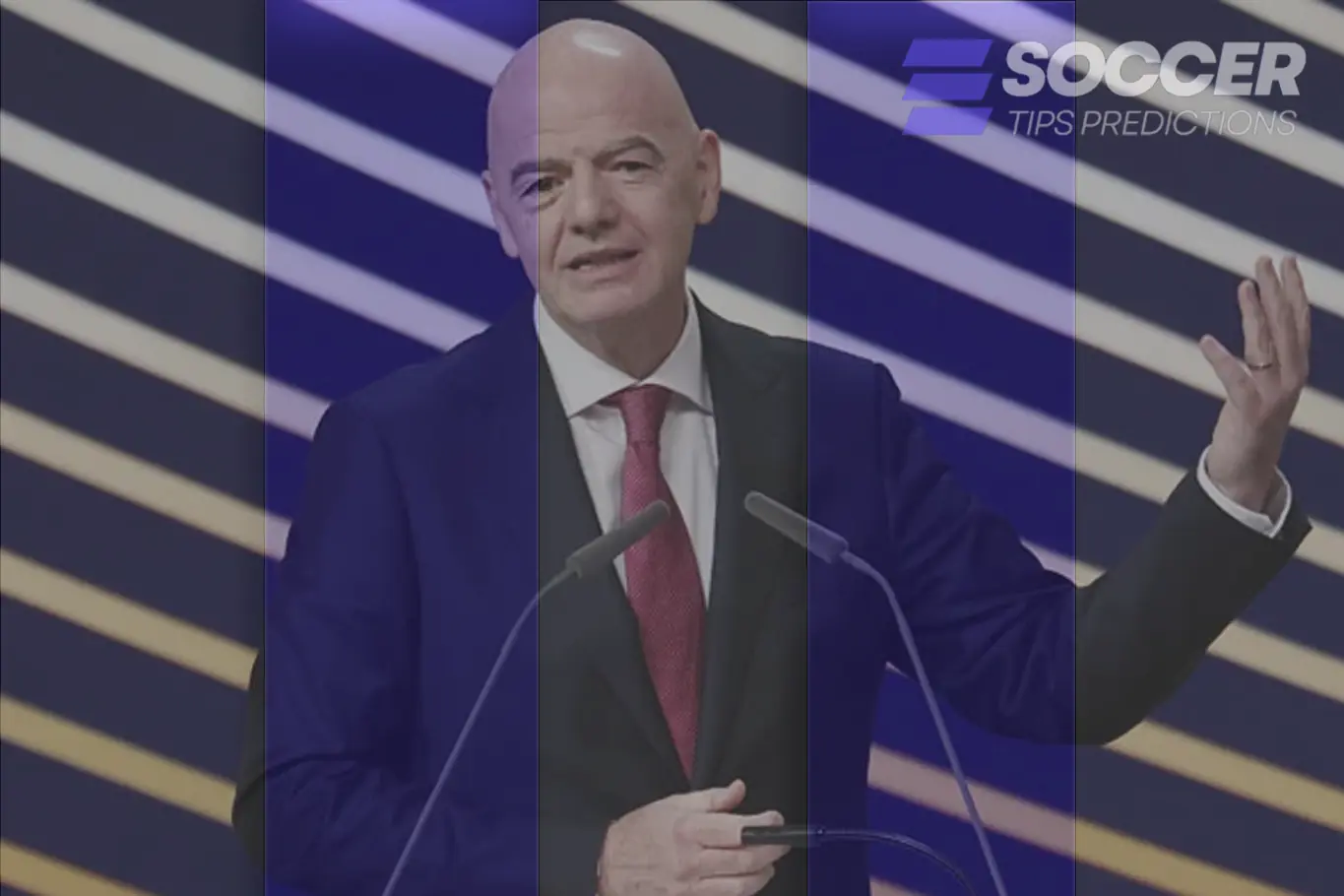
Out of nowhere, FIFA opened another round of ticket sales for the 2026 World Cup, and the timing immediately caused confusion because it came right after Gianni Infantino had been presenting a very different picture.
Only a week earlier, FIFA’s president had spoken with visible pride about the tournament being completely sold out, using huge headline numbers to underline the idea that fans had already snapped up every seat for every match. Now, with a new release suddenly appearing and with reports that tickets are still available for 64 of the 104 games, the conversation has shifted from excitement to credibility, and from hype to the messy reality of how World Cup ticketing actually works.
The contradiction looks simple on the surface: if everything was sold out, why is FIFA selling more tickets? But the deeper issue is that “sold out” is often used in a way that mixes marketing language with a complex, multi-phase distribution process. In major tournaments, FIFA does not put every seat for every match into a single public sale on day one. Inventory is segmented and scheduled. Some seats are held back for sponsors and partners, some are tied to hospitality, some are allocated to national associations, and some are released later once stadium operations, camera platforms, security zones, media positions, and accessibility requirements are fully locked in. That means tickets can reappear even after an earlier phase looks “sold out” to the public, because the public is only seeing one slice of the overall inventory at any given time.
Even so, Infantino’s phrasing last week was extremely absolute. He also pointed to an enormous figure, 508 million ticket requests, as if that number alone proved that every match would inevitably be a sell-out. The problem is that “requests” can be a misleading proxy for real demand, because it is not the same thing as people completing purchases at the prices on offer for the matches that are hardest to sell. A request can be an expression of interest, a speculative entry in a ballot, or a fan applying for multiple games and multiple categories. One person can generate many “requests,” and those requests do not necessarily spread evenly across the calendar.
That unevenness is exactly what experts were hinting at when they suggested FIFA may have been optimistic about certain matches. The World Cup is not one product; it is 104 different products with different levels of attractiveness. A late-round match between major nations in a marquee stadium is a different proposition from a group-stage fixture between less-followed teams in a city that requires expensive travel and accommodation. The first type of match can sell itself instantly. The second may still sell well overall, but it often needs more time, clearer narratives, and sometimes a different pricing strategy to convert interest into purchases.
Pricing is the elephant in the room. When people hear “tickets still available,” they often assume that means demand is weak. In reality, it can mean the opposite: demand exists, but the price is too high for the segment of fans most likely to attend those particular games. The World Cup is a global event, but the fan bases for some nations are less wealthy, less able to travel, or more sensitive to exchange rates. On top of that, ticket price is only the first cost. For 2026, with matches spread across the United States, Canada, and Mexico, travel can be the biggest barrier. Flights, accommodation, local transport, and time off work all sit on top of the ticket. A supporter might desperately want to attend, but when the full trip is costed, they pull back. So the match doesn’t “sell out” immediately, not because it isn’t wanted, but because it is priced like a premium product in a market that can’t always absorb it at speed.
There is also a behavioural piece that FIFA’s big “request” number does not capture. Fans disproportionately chase uncertainty. They want later-round matches because those are the ones associated with the biggest moments, the famous teams, and the drama. Many applications are therefore concentrated on knockout games, semi-finals, and matches expected to feature the giants. Early rounds can feel less urgent, especially for neutral fans who don’t know yet which teams will be in which positions, or who don’t want to commit to a match that might become a dead rubber depending on results. That is why the claim that requests were likely clustered around the later phases makes sense: it is the natural pattern of demand, and it helps explain how FIFA can talk about massive interest while still having availability for a large portion of the schedule.
Another reason tickets “come back” is operational reality. Stadium manifests change. Seats that were initially blocked can become available after final safety checks, sightline assessments, or broadcast layouts are confirmed. Entire sections can be reconfigured, either releasing additional seats or shifting inventory between categories. Payment windows and anti-bot processes also generate churn. Some fans fail to complete payment, some payment methods are rejected, and some ticket allocations time out and return to inventory. All of this can produce a new batch of available seats that looks, to the public, like FIFA suddenly decided the tournament wasn’t sold out after all.
But regardless of the behind-the-scenes mechanics, FIFA created its own problem with the way it communicated. When you tell fans, in plain language, that the tournament is fully sold out, you trigger two reactions. The first is resignation among supporters who were still hoping to attend and who may stop checking. The second is urgency and scarcity among those who already have tickets, which helps FIFA’s narrative of unprecedented demand. When tickets reappear shortly after, both reactions flip into skepticism. Fans start to wonder whether the original message was exaggerated, whether there is deliberate scarcity marketing, or whether FIFA simply misread the market for certain games.
That skepticism matters because ticketing is not only a revenue stream; it is a trust relationship. Fans plan travel, book hotels, coordinate with friends, and commit thousands in expenses based on what they believe about availability and timing. If supporters feel the messaging is inconsistent, they lose confidence in the process and become more cautious, which can actually make it harder to sell the less glamorous fixtures. Ironically, the “sold out” brag can backfire: if people believe there is no point trying, they don’t engage, and FIFA then has to work harder to move remaining inventory later.
This is why the expert observation in your text lands so strongly. Yes, World Cup demand is huge. But that does not eliminate the need for marketing support for certain matches, because not every fixture carries the same emotional charge or travel logic. And the comment that “even those games are very expensive” is important: it suggests the issue is not necessarily apathy, but a mismatch between price and perceived value for specific fixtures.
With 100 days to go, this new ticket release can still be framed positively for fans: it is another chance to get in. It also gives FIFA the opportunity to clarify what it meant. If the tournament is “sold out” in terms of initial allocations or certain phases, FIFA can say that more inventory was always planned to be released, that operational seat holds have been lifted, or that new ticket categories have been opened. But the public will judge FIFA less on the technicalities and more on consistency. If the message is “unprecedented demand,” the visible reality of tickets still on sale for over half the matches makes the market look more nuanced than the headline.
The most realistic reading is that both things are true at once. Interest is enormous, particularly for marquee games and late rounds, and the tournament will almost certainly be a commercial monster. At the same time, the expanded format creates a lot of supply, and some matches will need extra effort to sell through at premium prices, especially when travel costs and uncertainty are factored in. FIFA’s mistake was not acknowledging that nuance when it spoke in absolutes. Now the new ticket sale has exposed the gap between the marketing line and the on-the-ground shape of demand, and that gap is what people are reacting to.