Barcelona president Joan Laporta questioned recent refereeing decisions, citing added time, diving, and penalty standards, and warned that media pressure is distorting the environment, calling for clearer, more consistent corrections in Spanish football.
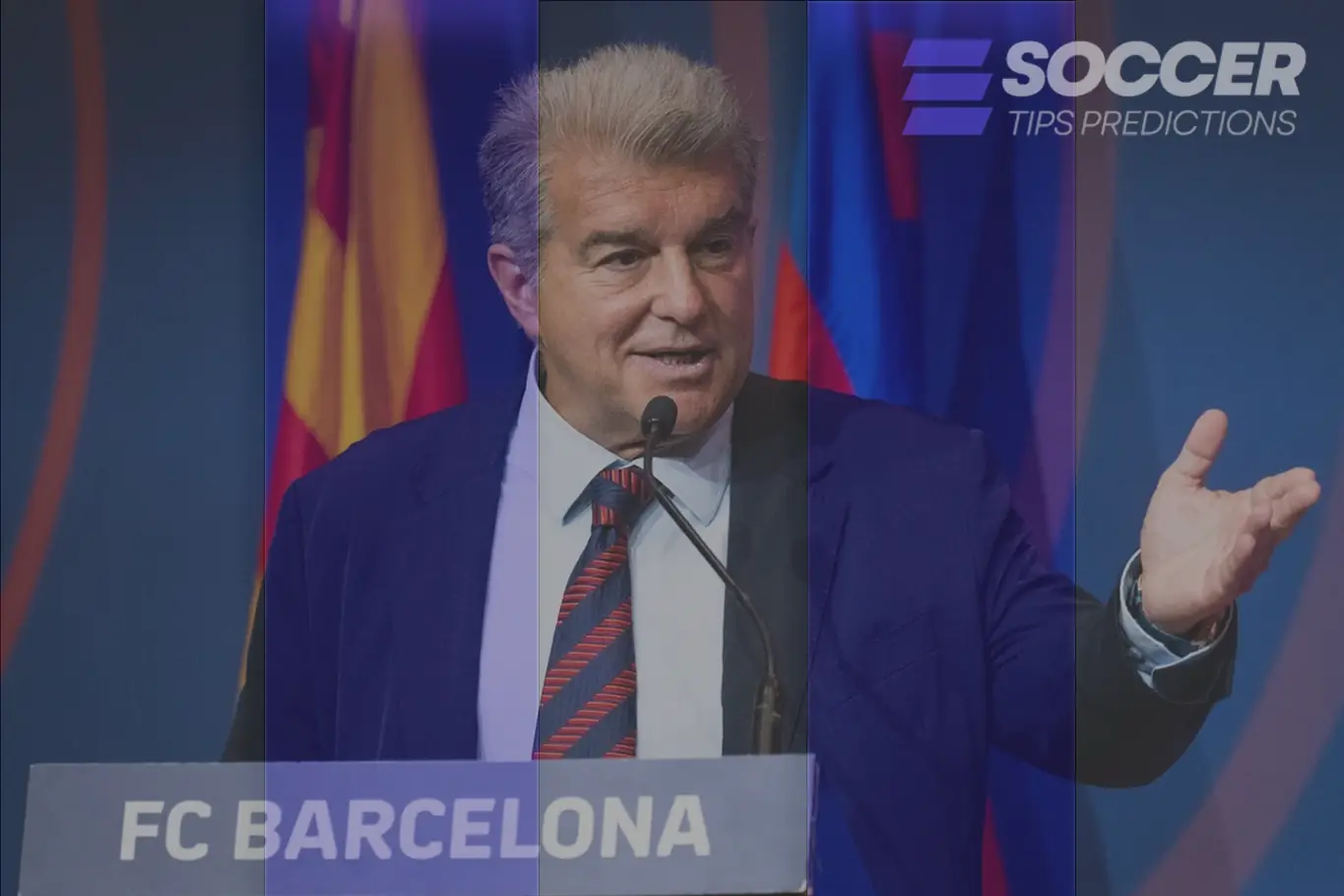
Joan Laporta has reignited the refereeing debate in Spain with a set of comments that were both pointed and carefully framed, delivered just before the official directors lunch between Albacete and Barcelona.
Asked about the growing controversy surrounding penalties awarded to Real Madrid and the broader conversation about potential pressure on officials, the Barcelona president chose a direct approach: he cited specific incidents, compared refereeing standards with other leagues, and argued that certain patterns must be corrected before they become normalized.
Laporta opened by saying he maintains full confidence in the institutions that govern Spanish football, including La Liga, the Federation and the relevant disciplinary and refereeing bodies. But he immediately added a nuance that became the backbone of his message. According to him, controversial decisions can happen in any competition and to any club. The issue, he suggested, is not that mistakes occur, but that they appear to pile up on the same side. That is where he drew his line: he wants the system to correct itself so that outcomes do not repeatedly tilt in a single direction, especially in situations he described as obvious.
His comments quickly moved from general principle to a concrete example: the Real Madrid match against Rayo Vallecano. Laporta referenced a previous joke he had made about a dive and then focused on the amount of added time, saying he did not understand where ten minutes came from. By highlighting added time, he was not only questioning one decision, he was questioning the overall management of match context, the type of detail that often shapes momentum, urgency, and the final minutes of pressure.
From there, Laporta broadened the argument into a wider critique of on field behavior and how referees respond to it. He claimed that players are getting used to going down too easily and that, in his view, this should be punished more consistently with bookings. This was a key part of his framing because it shifts the debate away from club identity and toward standards. If referees clamp down on simulation and theatrical falls, he implied, the environment changes and so does the volume of controversy.
To strengthen that point, he compared Spain with the Premier League, saying that in matches he has watched, referees show cards for studs on foot challenges and for diving. The comparison was deliberate. Instead of claiming Spain is uniquely biased, he suggested there is a different threshold elsewhere, and that Spain could benefit from adopting stricter, clearer consequences for certain actions. In doing so, he positioned his remarks as a push for improvement rather than a complaint rooted in rivalry.
Laporta then returned to the same Real Madrid and Rayo Vallecano match and said he felt Rayo had been badly affected by what happened. He was careful to present this as a fan’s observation, which can be read as an attempt to reduce the sense that he was speaking as a club boss defending Barcelona’s interests. That nuance matters, because Barcelona were not the opponent in that match. By using an example where his club was not involved, he tried to give the criticism a broader legitimacy and to argue that the issue is structural, not personal.
He also addressed the subject that always sits at the center of these debates: penalties. Laporta suggested there are spot kicks he would not award because, in his view, they are not actually fouls. He described a scenario where there is no clear kick on the attacker and the forward goes down in exaggerated fashion. Again, the emphasis was on interpretation and thresholds. His point was that if referees reward minimal contact or exaggerated reactions, they incentivize more of it, and the controversy escalates.
Where Laporta’s remarks became most explosive was in his closing focus on the media ecosystem around refereeing. He insisted he was speaking constructively and even acknowledged that decisions sometimes go in Barcelona’s favor as well. That admission was important because it signals he was not arguing that Barcelona are always harmed and others always helped. Instead, he used it as a bridge to what he believes is a core driver of the current climate: sustained public pressure.
He then pointed to what he described as a club television channel that repeatedly claims referees are against them and promotes narratives he called out of place. In Laporta’s view, when that messaging becomes constant, it shapes perception, fuels suspicion, and creates an environment where officials are influenced, consciously or unconsciously, by the noise around them. He implied that the consequence of that dynamic is an overcorrection, a tendency for decisions to fall in favor of the loudest narrative, which he suggested helps explain the pattern he is criticizing.
Laporta ended with a rhetorical question that functioned like a challenge to the decision makers and the wider football establishment: has nobody analyzed what this kind of sustained pressure does to the ecosystem. His final line, telling them to take a hard look at themselves, carried a tone of frustration but also a warning that the credibility of the competition depends on addressing perception as well as practice.
The timing of the remarks is also significant. Barcelona’s president speaking publicly ahead of a formal event with another club’s leadership suggests he understood the microphones would be there and that his comments would carry beyond a quick soundbite. It places his words inside a broader Spanish football context where refereeing, VAR interpretation, added time, and media pressure are constant flashpoints.
In short, Laporta’s message was built on 3 pillars. First, he says he trusts the institutions but wants visible correction when patterns appear. Second, he wants stricter punishment for dives and clearer thresholds for penalties. Third, he believes the media pressure surrounding refereeing is distorting the environment and needs to be confronted. Whether his remarks calm the debate by pushing for reform or inflame it by escalating tensions with rivals, the impact is clear: Barcelona’s president has chosen to put the refereeing conversation back at the center of the public agenda.