At Borussia Dortmund, the squad situation has eased ahead of the second leg in the Champions League play offs at Atalanta Bergamo. Captain Emre Can and defensive leader Nico Schlotterbeck are included in the squad.
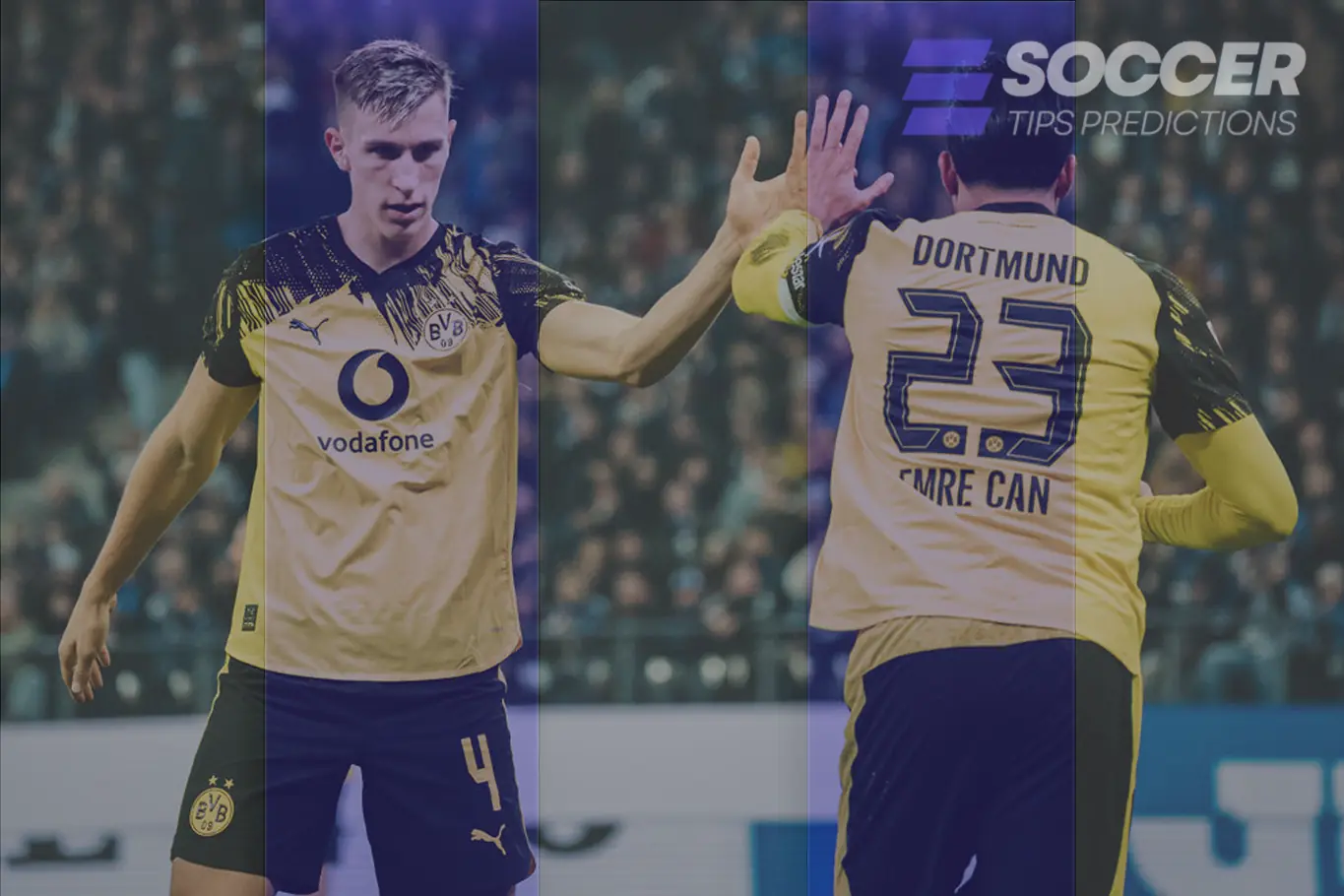
Borussia Dortmund have received a timely boost ahead of a decisive European night in Italy, with captain Emre Can and defensive leader Nico Schlotterbeck both travelling for the second leg of the Champions League play offs against Atalanta Bergamo.
After taking part in the final training session on Tuesday afternoon, Dortmund confirmed that the pair will board the flight to Italy, a development that significantly improves the squad outlook at exactly the moment the stakes rise.
The return leg in Bergamo kicks off at 21:00 on Wednesday, and Dortmund preparation had been shaped by uncertainty over two of the most important figures in their defensive structure. Having both players back in contention changes the tactical possibilities for the coaching staff, but it does not automatically settle the starting line up, because Dortmund have also found solutions during their absence.
Schlotterbeck return, in particular, had been gradually anticipated. The 26 year old Germany international had been forced to sit out three consecutive matches: first against Mainz 05 due to a suspension for yellow cards, then the first leg against Atalanta, and most recently the Bundesliga clash at RB Leipzig because of muscular issues. His availability now suggests the problem is manageable and that the medical staff are confident enough to clear him for the trip, even if match readiness and minutes management remain open questions.
Schlotterbeck presence matters because he is more than just another centre back option. He is one of Dortmund main organisers in the defensive line, a player who sets distances, communicates, steps into midfield when needed, and helps the team play out from the back under pressure. Against an Atalanta side known for aggressive pressing triggers, man oriented pressure and constant movement between the lines, Dortmund ability to keep calm in the first build up phase can be the difference between controlling the rhythm and being dragged into a chaotic, duel heavy match.
Emre Can return is also significant, but for slightly different reasons. The 32 year old has been sidelined since the beginning of the month with adductor issues, a recurring problem that has affected him for a while and has repeatedly interrupted his rhythm. For Dortmund, Can is a tactical problem solver: he can operate as a defensive midfielder shielding the back line, he can drop into a back three during build up, and he can even be used as an emergency centre back in games that demand physical duels, aerial competitiveness, and leadership under pressure. Even if he is not at peak sharpness, his experience and authority can stabilise the team in moments where the match swings emotionally.
However, Dortmund now face a selection dilemma rather than a selection crisis, because the replacements have delivered. In the absence of Can and Schlotterbeck, Waldemar Anton has impressed in central defence. His recent performances have strengthened his case to remain in the XI, especially if Dortmund want continuity in a pairing that has already been tested in competitive match conditions. Anton profile brings reliability in duels and clear decision making, and coaches often value that kind of momentum going into a second leg away from home.
There is also a narrative around Dortmund depth and development, highlighted by the inclusion of Luca Reggiani. The youngster, promoted from the clubs Under 19s, has not looked out of place when given opportunities and has earned his spot in the travelling squad to his country of birth. For Dortmund, that inclusion speaks to two realities at once: the club ability to trust young players in big environments, and the practical need to have extra defensive cover available when injuries and suspensions tighten the options. Even if Reggiani does not play, his presence gives the staff an additional layer of insurance in a match that could involve extra time, heavy physical load, or tactical reshuffles depending on the scoreline.
The key question now is how Dortmund will structure the defensive unit. There are multiple scenarios:
One option is a straightforward return to a Schlotterbeck led centre back setup, with Anton alongside him if the coach prioritises form and stability, while Can is reintroduced in midfield to protect the back line. That would give Dortmund leadership in both the first defensive line and the screening role in front of it, which is especially valuable against Atalanta runs from deep and their ability to overload central zones.
Another possibility is that Can and Schlotterbeck are both eased back rather than thrown straight into the starting XI. If either player is still managing a physical issue, Dortmund may prefer to keep the established recent pairing intact early on and use one or both as in game solutions. That approach is common in European second legs, where the staff want reliable rhythm from the opening whistle and then plan to adjust once the match context is clear: protecting a lead, chasing a goal, or dealing with an injury risk.
A third angle is that Dortmund could use Can in defence again if the match profile demands it. If Atalanta are expected to play with high intensity, direct balls into the channels, and constant duel situations, Can physicality and leadership could be seen as useful deeper on the pitch. But that would depend on how much the coaching staff trust his condition and match fitness, given the adductor problem that has been recurring.
Whatever the final configuration, Dortmund situation is undeniably improved compared to the uncertainty of recent days. Having Can and Schlotterbeck available gives the staff more flexibility, more leadership on the pitch, and more options to respond to match moments, whether that is protecting a narrow advantage, coping with an early concession, or managing the final half hour when legs begin to go and decision making gets harder.
For Atalanta, the news is also relevant because it changes the preparation on their side. They cannot assume the same Dortmund structure they saw recently, and they may need to plan for different build up patterns and different duel matchups. A fit Schlotterbeck alters the way Dortmund progress the ball and defend space. A fit Can alters the way Dortmund control central areas and handle transitions. Those are not minor details in a play off return leg.
In short, Dortmund travel to Bergamo with a far healthier picture than they had a week ago. The personnel situation has eased, but the coaching decision becomes more nuanced: reward the players who have stepped up, or reinstate the leaders who define the teams spine. Either way, Dortmund go into Wednesday at 21:00 with more tools to manage the match, and in European ties, having options often matters as much as having a preferred starting XI.