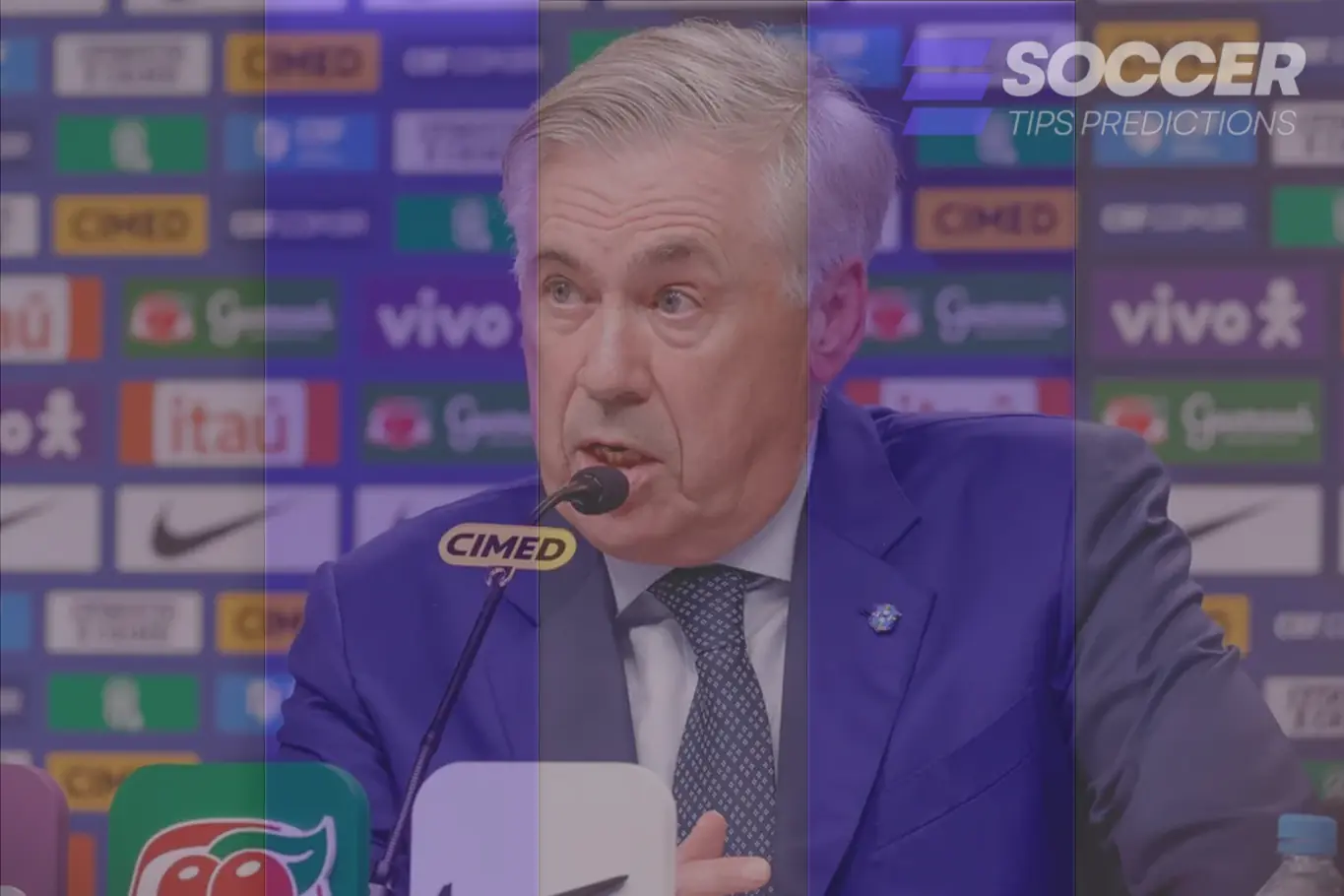
Carlo Ancelotti announced Brazils squad on Monday for the upcoming friendly matches against France and Croatia. The discussion then quickly shifted to a name that was missing: Neymar. The superstar has now been waiting more than two years for a return to the Seleção. Ancelotti explained why he did not include the Santos forward.
Neymar absence from Brazils squad for the matches at the end of March has immediately become one of the main talking points around the national team, not only because of his name and status, but also because of what the decision might mean for the future.
When Carlo Ancelotti unveiled his latest list, the attention quickly shifted away from the players who were included and toward the biggest star who was left out. For many supporters and commentators, seeing Neymar miss another call up naturally raised questions about whether his place in the plans for next summers World Cup is now in real danger.
Ancelotti, however, was careful not to turn the decision into a final judgment on the Santos forward. The Brazil coach made it clear that Neymars story with the national team is not necessarily over, but he also refused to offer any guarantees. His message was straightforward and based entirely on physical condition. If Neymar is not at one hundred percent, he will not be part of the squad. If he reaches that level again, then the door remains open. That response was deliberately measured. It avoided both extremes. It did not suggest that Neymar is finished with Brazil, but it also did not protect him with promises based only on reputation or past achievements.
That stance says a great deal about how Ancelotti wants to manage this phase of his time with Brazil. He is trying to build a squad with the next World Cup in mind, and in doing so he is sending a clear message that physical readiness matters above everything else. Neymar may still be one of the most gifted players Brazil has produced in recent decades, but the coach appears unwilling to select anyone who is not fully prepared to compete at the required level. In international football, where preparation time is limited and the pressure is always high, that kind of clarity can be crucial. Coaches cannot afford to carry uncertainty into major tournaments, especially when every place in the squad is fiercely contested.
That is why Ancelotti explanation felt so important. He did not leave the reason open to interpretation. He said plainly that Neymar was not selected because he is not one hundred percent fit. He added that he needs players who are at that level. There was no talk of discipline, no tactical justification, no suggestion of any personal issue. The explanation was purely physical. Even so, because the player involved is Neymar, the decision instantly became much bigger than a standard fitness call.
The wider context makes that inevitable. Neymar remains one of the defining figures of Brazilian football. Even after injuries, interruptions and the constant public scrutiny that has followed him throughout his career, he is still seen by many as one of the few players capable of changing the emotional and creative temperature of a match all by himself. His presence carries symbolic weight. He is not simply another forward competing for a place. He is a player whose name immediately changes the way the squad is perceived, both inside Brazil and internationally.
Yet Brazils attack is no longer built around one individual in the same way. The group selected by Ancelotti reflects both depth and generational transition. The coach chose Endrick, Gabriel Martinelli, Igor Thiago, Luis Henrique, Matheus Cunha, João Pedro, Raphinha, Rayan and Vinícius Júnior as his attacking options. That list contains players from different backgrounds, different leagues and different stages of their careers, but all of them share one important feature: they are available now and ready to compete. Some bring speed, some offer directness, some can play centrally or wide, and others are still emerging talents with room to grow. Together, they represent a Brazil attack that is increasingly broad in profile and less dependent on one star.
In that sense, Neymars omission is not just about his condition. It is also about timing. Every window before a World Cup 2026 is valuable, and every friendly match becomes part of a larger selection process. Coaches use these games to test combinations, observe chemistry and measure how players respond to the demands of international football. If Neymar is absent, others gain a chance to strengthen their case. That can change the balance of the competition within the squad very quickly. A player who impresses now could become much harder to displace later, even if Neymar returns to fitness.
Neymar own reaction showed how deeply he felt the decision. Speaking during a stream after the squad announcement, he made it clear that he could not simply let the moment pass in silence. He admitted that he was disappointed and sad not to have been called up, a response that felt honest and understandable given his history with the national team. For a player who has carried so much expectation for so long, being left out is never a neutral event. It touches pride, ambition and the personal bond he has always had with Brazil.
At the same time, his words also revealed determination rather than resignation. Neymar stressed that the focus remains unchanged, day after day, training session after training session and match after match. That repetition was significant because it suggested discipline and persistence rather than emotional collapse. He did not present himself as defeated. Instead, he framed the omission as part of a process that is still unfolding. He pointed out that there is still one final call up to come and insisted that the dream remains alive. That line matters because it shows he still believes he can force his way back into contention before the World Cup.
His social media activity reinforced that message. Neymar posted a photo of a tattoo on his leg with the phrase about others not understanding how obsessed he is with winning. The image was not random. It was a way of projecting mentality, hunger and competitive identity at a moment when doubts about his future with the national team had started to grow. Beneath the image, he thanked supporters for their kind messages and urged them to trust the process. He added that what has to happen will happen and ended with a call to work in silence. Altogether, it was a response designed to show that, although hurt, he remains focused and motivated.
That combination of disappointment and resolve is likely to shape the narrative around him in the coming months. Every appearance for Santos, every training update and every sign of physical progress will now be examined through the lens of the World Cup question. If he looks sharp, the debate will intensify in his favor. If he struggles for rhythm or continuity, the argument for moving forward without him will become stronger. That is the reality Ancelotti has created with his decision. By keeping the door open but setting a firm condition, he has placed the responsibility squarely on Neymar to prove he is ready.
From Brazils perspective, this may not be the worst scenario. The coach has established a clear standard, the competition for places remains alive, and Neymar knows exactly what he must do. There is no ambiguity. Reputation alone will not be enough, but neither has he been discarded. That balance may be difficult emotionally, yet it is often necessary in the final build up to a major tournament.
For now, the headline is that Neymar is out and that he is clearly unhappy about it. But the bigger story is that this is not yet a final chapter. Ancelotti has made a demanding but simple calculation: only fully fit players will go. Neymar, in turn, has answered with frustration, ambition and a promise to keep pushing. That sets the stage for what could become one of the most closely watched selection battles in world football over the months ahead. Whether he makes it back or not, one thing is already clear: the road to the World Cup for Neymar will not be built on status. It will have to be earned.