Egypt have taken the lead in Group G at the World Cup. The team coached by Hossam Hassan fought back from behind after the break against New Zealand in Vancouver and won 3-1. For Egypt, it was their first ever win at a World Cup.
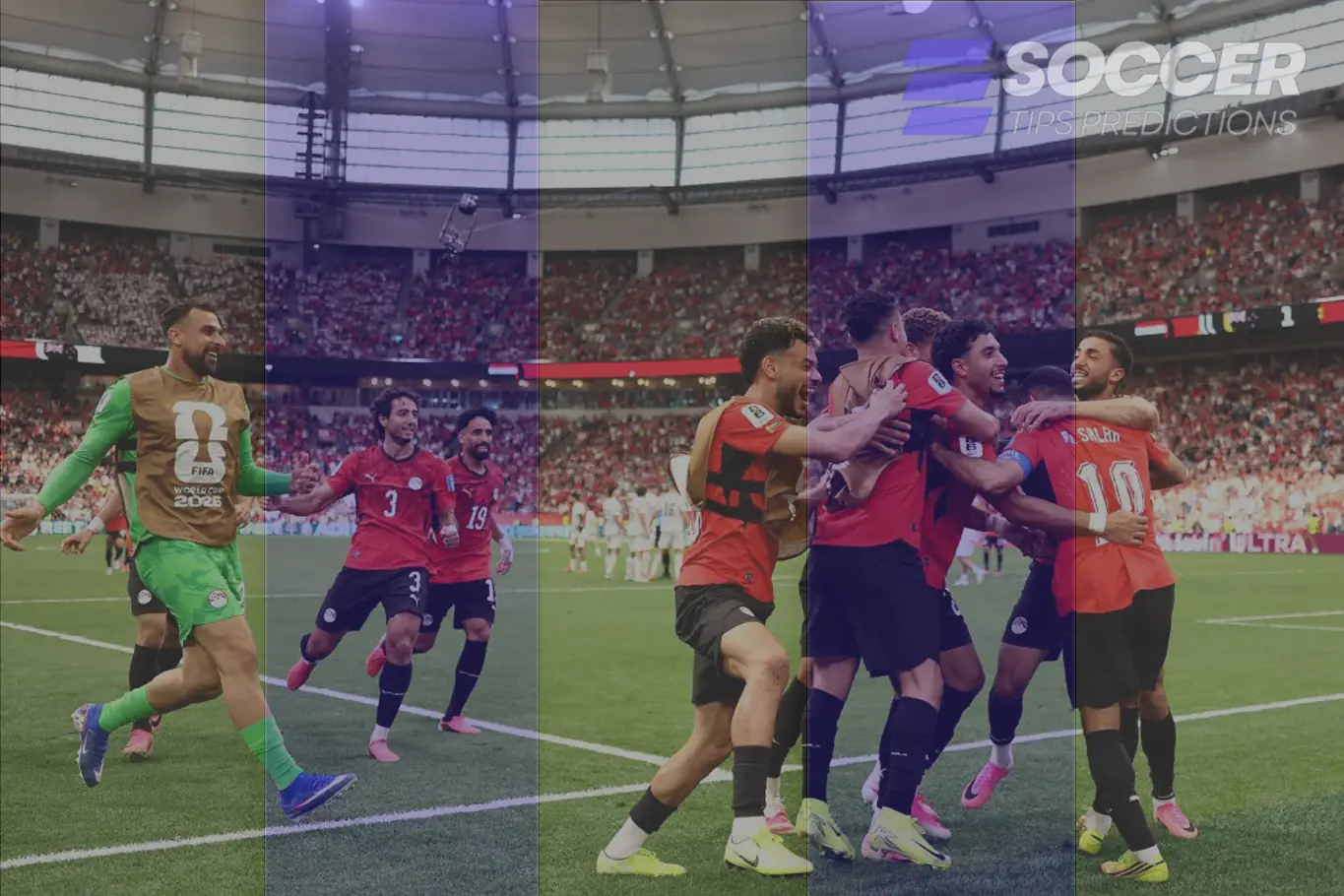
Egypt fight back against New Zealand to take control of Group G
Egypt produced a powerful second-half comeback to beat New Zealand 3-1 in Vancouver and move to the top of Group G at the World Cup. After falling behind early in the first half, the team coached by Hossam Hassan responded with character, patience and greater attacking authority after the break, turning a difficult match into a historic victory.
The result is a major moment for Egyptian football. Not only did Egypt claim 3 vital points in a competitive group, but they also secured their first ever victory at a World Cup. For a country with a proud football tradition, strong continental history and generations of talented players, this win carries emotional weight far beyond the group table.
New Zealand had started the match with confidence and struck first after only 15 minutes. Finn Surman gave the All Whites the lead with a header from a Tim Payne corner, rewarding a positive opening spell in which New Zealand looked organised, direct and dangerous from set pieces. The goal placed Egypt under immediate pressure and forced Hossam Hassan side to chase the match for a long period.
For much of the first half, New Zealand looked comfortable with the scenario. They defended in compact lines, tried to slow the rhythm and relied on their physical strength to protect the lead. Egypt had more technical quality in certain areas, but they struggled to find the right tempo before half-time. Their passing was not always sharp enough, and their attacking moves often broke down before becoming truly dangerous.
However, the match changed completely after the break. Egypt returned from the dressing room with more urgency, more belief and a clearer attacking plan. The team began to push higher, move the ball quicker and place more pressure on the New Zealand defence. What had looked like a frustrating evening started to become a test of New Zealand resistance.
Mostafa Ziko changes the momentum after the break
The equaliser arrived in the 58th minute and it came through Mostafa Ziko, one of the decisive figures of the match. The forward found space inside the penalty area and scored with a header, bringing Egypt level and changing the emotional direction of the game. From that moment, the Egyptian players looked more confident, while New Zealand were forced into a more reactive position.
Ziko goal was important not only because it made the score 1-1, but because it gave Egypt the energy they had been missing. The equaliser lifted the tempo, increased the pressure from the crowd and made New Zealand defend deeper than they would have wanted. Egypt suddenly had control of the match and began to attack with greater conviction.
The role of Ziko became even more important midway through the second half. After combining with Mohamed Salah, he helped create the move that allowed the Egyptian star to put his country ahead. Salah, who had been closely watched throughout the match, showed once again why he remains the reference point of this team in the decisive moments.
The goal from Salah made it 2-1 and completed the turnaround. It was the kind of moment Egypt had been waiting for: their most influential player stepping forward when the team needed him most. New Zealand had worked hard to contain him, but players of his level rarely need many opportunities to leave a mark on a match.
Salah leads Egypt into a stronger position
Mohamed Salah influence was not limited to the goal. Even when he was not constantly involved, his presence changed the way New Zealand defended. They had to stay aware of his movement, his acceleration and his ability to combine in tight spaces. That created room for others and helped Egypt grow into the game after a slow start.
For Egypt, having Salah decisive in a World Cup victory is especially meaningful. He has carried the expectations of the national team for years, often playing under enormous pressure. Against New Zealand, he did not need to dominate every minute. He needed to be present at the right moment, and that is exactly what happened.
The Egyptian response after going behind showed a team with personality. Some sides lose structure when they concede early in a World Cup 2026 match, especially when the stakes are high. Egypt did the opposite. They suffered, adjusted and eventually imposed themselves. That resilience could prove vital in a group where every point may matter until the final round.
New Zealand, meanwhile, will feel they allowed a major opportunity to escape. After taking the lead early, they had a platform to control the game and put real pressure on Egypt. But once the equaliser arrived, they struggled to recover their defensive calm. The spaces became larger, Egypt attacked with more confidence and the final stages belonged clearly to the African side.
Trézéguet seals the win from another corner
The victory was confirmed in the 82nd minute when substitute Trézéguet made it 3-1. Like the opening goal of the match, his strike came from a corner and was finished with a header. It was a fitting end to a game in which set pieces played a major role, but this time it was Egypt who used that weapon to finish the contest.
Trézéguet impact from the bench gave Egypt exactly what they needed in the closing stages: energy, experience and attacking instinct. His goal removed most of the tension from the final minutes and allowed Egypt to manage the rest of the match with greater control. For Hossam Hassan, it was also a sign that the squad has options beyond the starting eleven.
The final score of 3-1 reflected the strength of the Egyptian second-half performance. New Zealand had started well and deserved credit for their early lead, but Egypt were stronger after the interval. They showed more quality in the decisive areas, made better use of their attacking players and handled the pressure of the occasion with increasing maturity.
The win also changed the shape of Group G. Belgium had drawn 0-0 with Iran on Sunday, a result that kept the group tight and left all 4 teams with something to play for. Egypt have now moved ahead with 4 points from 2 matches, while Iran and Belgium have 2 points each. New Zealand remain on 1 point, but they are not yet eliminated.
Group G remains wide open before the final round
After 2 rounds, Egypt lead Group G with 4 points. That gives them a strong position, but not complete security. Iran and Belgium are both close behind on 2 points, and New Zealand still have a chance with 1 point. The final round will therefore carry major consequences for all 4 teams.
On Saturday at 05:00 Dutch time, Belgium face New Zealand, while Egypt play Iran. Those 2 matches will decide the final order of the group and could produce several different qualification scenarios. The top 2 countries qualify directly for the next round, while the 8 best third-placed teams from the 12 groups also go through.
For Egypt, the task is now clear. A positive result against Iran would likely be enough to confirm progress and could secure first place in the group. But Iran have already shown defensive discipline and competitive strength, especially in the 0-0 draw against Belgium. That makes the next match a serious test of Egyptian control, patience and tactical balance.
Belgium, meanwhile, know they cannot afford another frustrating result. Their draw against Iran has left them under pressure before facing New Zealand. On paper, Belgium may still be expected to win, but this group has already shown that reputation alone will not decide matches. New Zealand will enter that fixture knowing a victory could still transform their tournament.
The qualification format also adds an extra layer of tension. With the best third-placed teams also in contention, goal difference, goals scored and match control can become extremely important. Egypt 3-1 win over New Zealand was therefore valuable not only because of the 3 points, but also because of the margin of victory.
A historic night for Egyptian football
The emotional importance of this result should not be underestimated. Egypt have enjoyed great success in African football, but the World Cup has often been a frustrating stage for the national team. To finally claim a first victory at the tournament gives this squad a place in the history of Egyptian football.
For Hossam Hassan, the win will also strengthen confidence in his leadership. His team did not panic after falling behind, and the second-half response suggested that the players believed in the plan. The substitutions, the increased attacking aggression and the way Egypt used set pieces all contributed to a performance that grew stronger as the match went on.
The match also showed the value of experience. Salah and Trézéguet both played decisive roles, while Ziko emerged as a central figure in the comeback. Egypt did not rely on one player alone. They needed different solutions at different moments, and several players answered the call.
New Zealand can take some positives from the first half, especially the way they started the game and caused problems from dead-ball situations. But the defeat will be painful because they had the lead and could not protect it. At World Cup level, momentum can change quickly, and New Zealand were unable to stop Egypt once the pressure increased.
For Egypt, this was a night of relief, celebration and renewed ambition. The team now sit at the top of Group G, have written a new chapter in their World Cup history and enter the final group match with qualification firmly within reach. The comeback against New Zealand was not perfect, but it was full of character, and that may matter even more as the tournament moves toward its decisive stages.